Thursday, May 8, 2014

Urban bird adaptations


This  post was first published by the Cornell Lab of Ornithology and with their with permission it is being reposted here.


Not Just Sparrows and Pigeons: Cities Harbor 20 Percent of World’s Bird Species
By victoria on Tuesday, April 29th, 2014 - 6 Comments

By Andrea Alfano


Rock Pigeons, House Sparrows, and European Starlings are widely known as “city birds,” and with good reason. These three species (plus Barn Swallow) occur in more than 80 percent of cities according to the first-ever global study of biodiversity in urban areas, published earlier this year in Proceedings of the Royal Society B. But there’s more to cities than this narrow cast of avian urbanites: cities also retain more of their region’s native diversity than previously thought, according to the study’s analyses of bird and plant census data. So take heart, your next city stroll has much more to offer than just a few ubiquitous species.

In fact, at least 2,041 species—20 percent of all known bird species—live in the world’s cities, according to the research. Unlike previous studies, which have focused on single cities or regions, this study spanned six continents, compiling data on birds from 54 cities and plants from 110 cities. The researchers themselves hailed from North America, Europe, Australia, and South Africa.


House Sparrows are one of the most successful species to adapt to living in urban environments, but a surprising 20 percent of the world’s species can be found in urban areas. Photo courtesy of Madhusudan Katti.

“One of the big paradigms of urban ecology is that the biota of the world’s cities is homogenized,” said lead author Myla Aronson, a researcher at Rutgers University and a Cornell University alum. “But we showed that at the global scale, cities are primarily retaining the unique composition of their geographic location.”
This means that although there are a few species that can truly be considered ubiquitous “city birds,” they are in the minority—a finding that wouldn’t have been possible without the global scope of this study. In fact, the list of species that you can find across 80 percent of the world’s cities amounts to just the four species mentioned above. The full list of birds found in cities includes nearly three-quarters of all bird families. Cities even provide habitat for rare species, including a total of 36 bird species identified by the IUCN Red List as threatened with extinction, the study said.

For many people, this remarkable diversity is often overshadowed by the notion that humans have almost entirely forced nature out of cities. A recent study by a different group showed that many urbanites fail to notice increases in biodiversity even when they happen.

“If you’re not particularly connected with nature, it’s easy to just not see what’s there,” said Karen Purcell, project leader for a Cornell Lab project called Celebrate Urban Birds. Purcell aims to change this “biodiversity blindness” by encouraging people to learn about and look for just 16 bird species that are commonly found in cities. It’s intended as a manageable introduction to the amazing diversity that can be found in cities.

Formerly on the endangered species list, Peregrine Falcons are increasingly common in cities and are one of 16 species tracked by our Celebrate Urban Birds citizen-science project. Photo courtesy of Laura Erickson.

For many city-dwellers, knowledge of just these few species leads them to become more aware of urban biodiversity in general, and encourages them to take pride in their city’s non-human life in addition to its human culture.

“We want to get that bug into people to watch,” said Purcell.

Urbanites are right to realize that cities are by no means ideal habitats for birds. Many species still manage to survive in them, but only around 8 percent as many species are found in cities as in the non-urban areas surrounding them. That’s why part of the goal of Celebrate Urban Birds is to inspire people living in cities to take action to support their urban biodiversity.

“Providing native vegetation is something that not only city planners can do, but that people can also do on a smaller scale,” said Frank La Sorte, a researcher at the Cornell Lab and an author of the urbanization study.
Cities with the least amount of urban land cover have the highest densities of bird species, according to the study. Parks and community gardens filled with native plants play an important role in maintaining bird species, but providing even small patches of vegetation, like hanging basket plants or container gardens, can help to attract birds to urban areas.

As of now, cities cover only 3 percent of the Earth’s terrestrial surface, but this doesn’t mean that the effects of urban greening efforts are insignificant. It’s not only the size of a city that affects biodiversity—location is important too.

“People tend to settle in regions that are already very species-rich because these are often the best areas in terms of climate and agricultural activities,” said La Sorte.

Cities may only take up 3 percent of the Earth’s land cover, but they are currently home to more than half of the world’s human population. This makes increasing awareness of biodiversity in cities even more crucial, because people can’t care about or protect things that they don’t notice. But actions as simple as participating in a citizen science project like Celebrate Urban Birds can open one’s eyes to biodiversity for a lifetime

“Once you see, you don’t ever stop seeing,” said Purcell.

For more on biodiversity in urban areas:

Reference:

reposted from:
The Cornell Lab of Ornithology blog:

Monday, April 28, 2014


Video for a Belgian Bus company on why you should travel in groups.... Carpool. Save the planet and your life!

Here are some fun facts about carpooling taken from Statistic Brain.

Carpool Statistics
Total percent of people who carpool with a family member 51%
Percent of people who carpool with someone that they live with 40%
Percent of Americans who carpool 10%
Percent of people who carpool with just 1 other person 77.3%
Percent of Americans who drive to work solo 78%
Percent of traffic that would die down if everyone carpooled once a week 20%
Total amount of gas saved yearly by carpooling 85 million gallons
Total amount of miles of avoided traffic every year by carpooling 56,000 miles
Total amount of money saved by carpooling every year $1.1 billion
*Cost estimates are based on AAA "Your Driving Costs 2008" with fuel @ $4.00 per gallon for average vehicle.  Variable costs include gas, tires and maintenance for the actual commute miles driven, but do not include ownership costs such as finance charges, insurance, license, registration, taxes or depreciation.   Ownership costs would typically add about $450 per month to these costs.
Round-trip miles Cost to drive alone Cost if 2 people carpool Cost if 3 people carpool
10 $51 $26 $17
20 $102 $51 $34
30 $152 $76 $51
40 $203 $102 $68
50 $254 $127 $85
100 $508 $254 $169

Tuesday, April 15, 2014

Human Animal Conflict


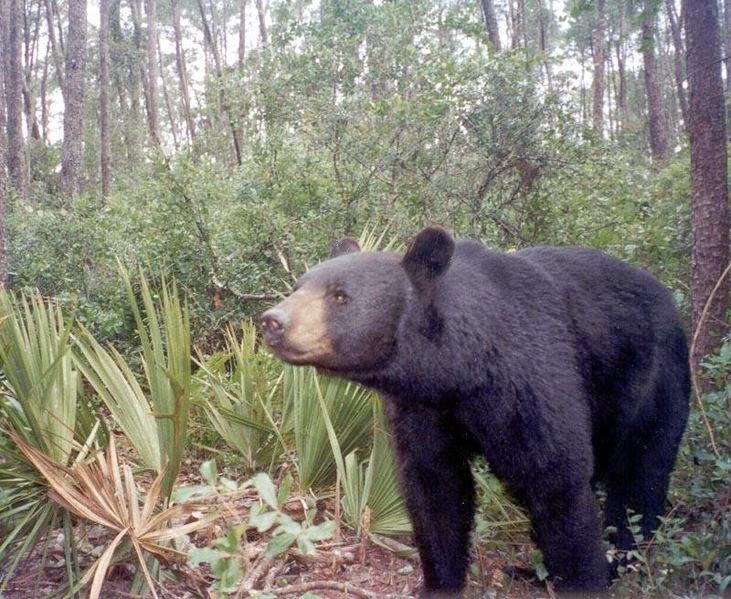
Trouble for the Florida Black Bear (Ursus americanus floridanus)


      Black bears are resilient food generalists and have adapted to an environment that is increasingly altered and dominated by human use. Black bears in the state of Florida now are forced to live in very close proximity to residential areas. Human—bear conflict is on the rise. According to Siemer, et. al, black bear attacks on humans are rare; however on the rise. These negative interactions have changed bear management actions, which are not always good for the bears.

       According to Defenders of Wildlife, nearly 20 acres (81,000 m2) of wildlife habitat are lost to new development every hour in Florida. Additionally, bears being injured or killed by motorists is another threat to regional populations. Since 1976 there have been more than 1,356 documented cases of bears being killed in Florida. Over 100 bears are killed on Florida roadways each year. Now there is an increased threat from human animal conflict. 

The most recent local example of a human/bear conflict can be seen here

References: 

 
Siemer, W., Hart, P., Decker, D., and Shanahan, J., 2009. Factors the Influence Concern About Human—Black Bear Interactions in Residential Settings. Human Dimensions of Wildlife. 14:185-197. Online. Available through Routledge.

Thursday, April 10, 2014

professor spotlight


This is a 12-minute, student-made documentary featuring the work of Dr. Jon Moore, Biology professor here at the Wilkes Honors College. The film features his ecological research on the gopher tortoises at the Abacoa Greenway in Jupiter, Florida. The videographer and editor is Nasir Khan, who is working on a masters degree in documentary making at FAU. Honors thesis student, Tokio Sano, is also featured in this film.

Monday, March 31, 2014

Death by Window


According to a new study, one of the biggest threats to birds in the United States is flying directly into the windows of buildings. Between 365 million to 988 million birds may die this way; that is about 2-10 per 100 birds.

Why do birds to fly into windows? It can be they just don’t see it or they mistake the reflection for the real sky. Surprisingly, skyscrapers are not the cuprit. The study found skyscrapers are responsible for less than 1 percent of bird deaths resulting from window collisions. Homes or other buildings from 4-11 stories are responsible for 44% of bird deaths.

Birds that are migrating from Central or South America are more vulnerable to window collisions. It is suspected that these birds travel at night and may be confused by artificial lighting.

Researchers suggest, that if your windows are experiencing bird collisions, a simple solution may be to attach a piece of reflective tape. This signals the bird to steer clear.

You may read more on this study from the link below.

References:
Ornes, S., 2014. Birds versus windows: Skyscraper windows kill fewer birds every year than the windows on low-rise buildings. Society for Science and the public. Online. Available at: https://student.societyforscience.org/article/birds-versus-windows
 

Thursday, March 20, 2014

It's back....H7N9


The second outbreak of Avian Influenza (bird flu) H7N9 in China is now being called an epidemic by the World Health Organization.

The latest outbreak of the bird flu in China seems to show signs of decreasing, which points to seasonal patterns; however WHO’s representative in China said this is not the time to relax. 2014 shows that there have been 72 deaths and 226 people infected with the H7N9 virus. We can compare this to last year’s event that had 144 infections and 46 deaths in 2013.

WHO and Chinese authorities maintain there is no evidence of sustained human transmission; however cases of close family members infecting each other have risen. Biospectrum (March, 2014) reported “The Shanghai Public Health Clinical Centre last month said it had developed a genetically engineered vaccine for H7N9. Hangzhou,  the current epicenter of the outbreak has announced radical plans to ban - forever - all live poultry trading in urban areas, according to state media, and replace it with factory-slaughtered and frozen meat.

The Chinese National Poultry Association estimated over $3 billion in losses so far. Controlling the disease is difficult because the birds (chickens and ducks) present no clinical signs of disease.

To find out more about H7N9 you can look at the CDC website here or go to the World Health Organization’s website here.


Reference:

Biospectrum, 2014. Online. Available at: http://www.biospectrumasia.com/biospectrum/news/210971/-china-s-h7n9-outbreak-epidemic#.UysyfM5Wq1g  [Accessed on 3/20/2014].

Center for disease control (CDC): http://www.cdc.gov/flu/avianflu/h7n9-virus.htm


Tuesday, March 4, 2014

Take a quiz about endangered species


Critically Endangered Species Quiz

1.A species is considered critically endangered if:
a.Its population has not changed at all in three generations
b.It can only be found in one location
c.Its population has decreased by at least 80% within three generations
d.It is a really big species

2.What organization is responsible for listing species as critically endangered?
a.The United States government
b.The International Union for Conservation of Nature
c.The United Nations Environmental Program
d.The National Zoo Association

3. True or False: African Penguins are the only penguin species found in Africa.

4.Where is the Hirola Antelope found in the wild?
a.Colombia
b.The Democratic Republic of Congo
c.Around the border between Kenya and Somalia
d.In the Andes Mountains

5.True or False:Raptors are considered to be gentle birds that only eat plants and grasses.


6.What percentage of its life will the Cantor’s Giant Soft-shell Turtle spend buried motionless in the sand?
a.12%
b.59%
c.95%
d.82%

7.True or False: The Antiguan Racer is a non-venomous snake

8. In what region can the Duiker, Ploughshare Tortoise, and Red Colobus Monkey be found?
a.North America
b.Europe
c.Africa
d.Southeast Asia

9.True or False: The Ethiopian Wolf is one of three wolf species that can be found in Africa.

10.What separates Grevy’s Zebra from other zebra species?
a.It is smaller than other species
b.It has a plain white underbelly
c.It has no stripes
d.All of the above

11.In what Southeast Asian country can you find the Siamese Crocodile?
a.Vietnam
b.Cambodia
c.South Korea
d.Indonesia

12.Which species is considered to believe to turn into gold once it dies?
a.Cauca Poison Frog
b.Golden-lion Tamarin
c.Pygmy Three-toed Sloth
d.Panamanian Golden Frog

13.True or False: The Blue-eyed Black Lemur is only one of two non-human species that have blue eyes.

14.What makes the Markhor’s horns unique?
a.It has no horns.
b.Its horns are long and spiraled.
c.The horns are connected
d.The horns are covered with long fur

15.True or False: Critically endangered species come in all shapes and sizes and can be found across the globe.

ANSWER KEY
1.C
2.B
3.T
4.C
5.F
6.C
7.T
8.C
9.F
10.B
11.B
12.C
13.T
14.B
15.T

reference:  https://www.fws.gov/international/pdf/education-final-quiz-critically-endangered-species.pdf